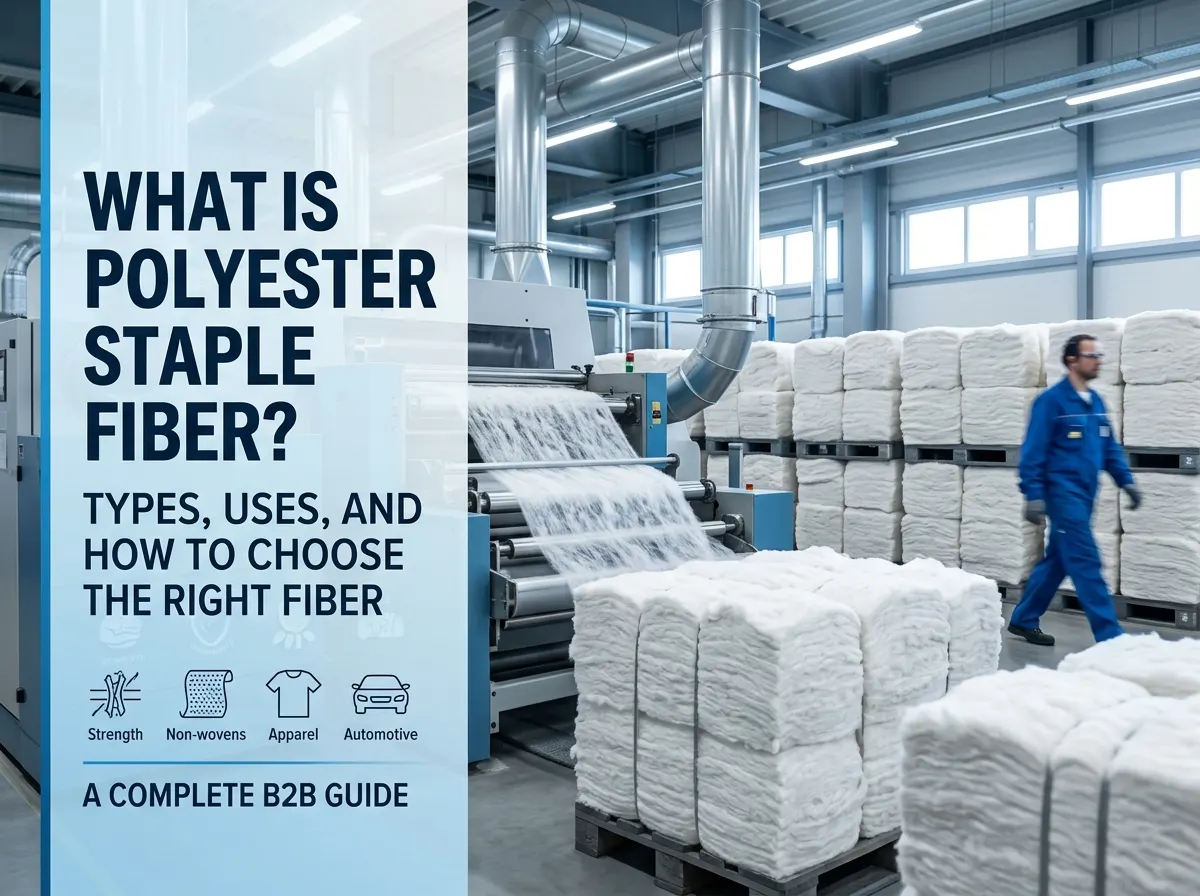
Polyester staple fiber, often called PSF, is one of the most widely used synthetic fibers in textile manufacturing. It is a short-cut fiber made from polyester raw material and used in everything from yarn spinning and filling products to nonwoven materials and technical textiles.
If you work in sourcing, product development, or manufacturing, understanding PSF can save time when you are selecting the right material for a specific application. The fiber may sound simple, but the structure, specification, and end use can vary a lot from one product to another.
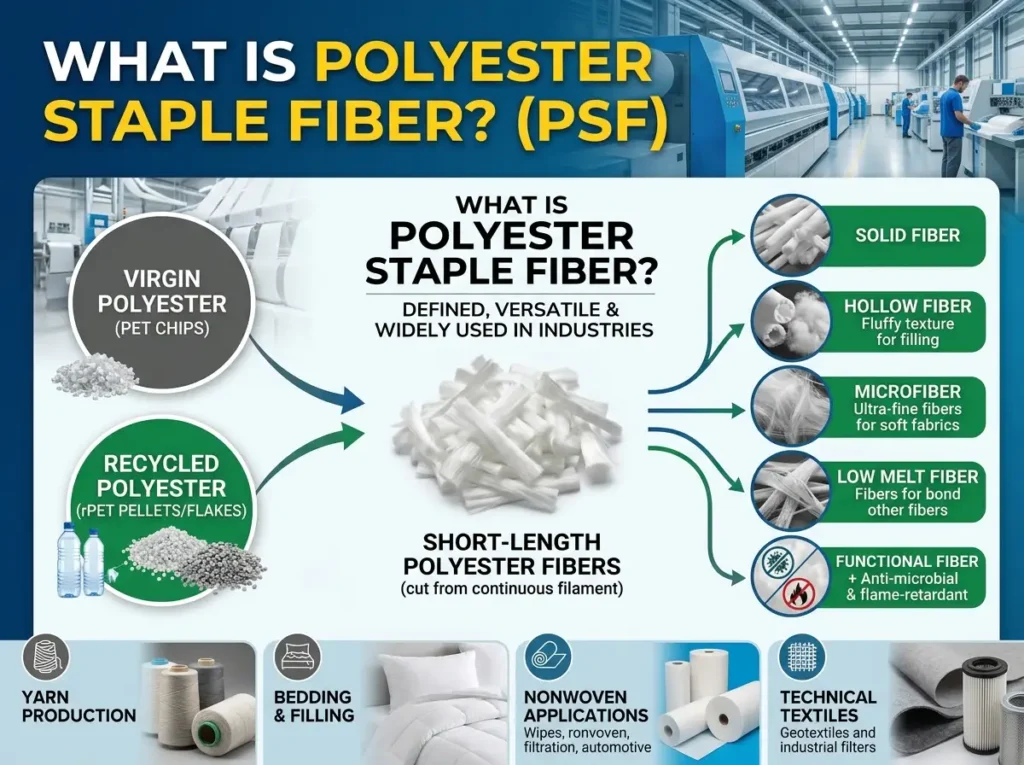
What Is Polyester Staple Fiber?
Polyester staple fiber is a polyester fiber cut into short lengths rather than produced as a continuous filament. That short-length structure is what makes it suitable for spinning, filling, and many nonwoven applications.
In practical terms, PSF is a very flexible raw material. It can be produced from virgin polyester or recycled polyester, and it can also be engineered into different forms such as solid fiber, hollow fiber, microfiber, low melt fiber, and functional fiber.
Because of that flexibility, PSF is used across many industries. Some types are better for yarn production, while others are better for bedding, insulation, nonwoven bonding, or products that need special performance features.
Main Types of Polyester Staple Fiber
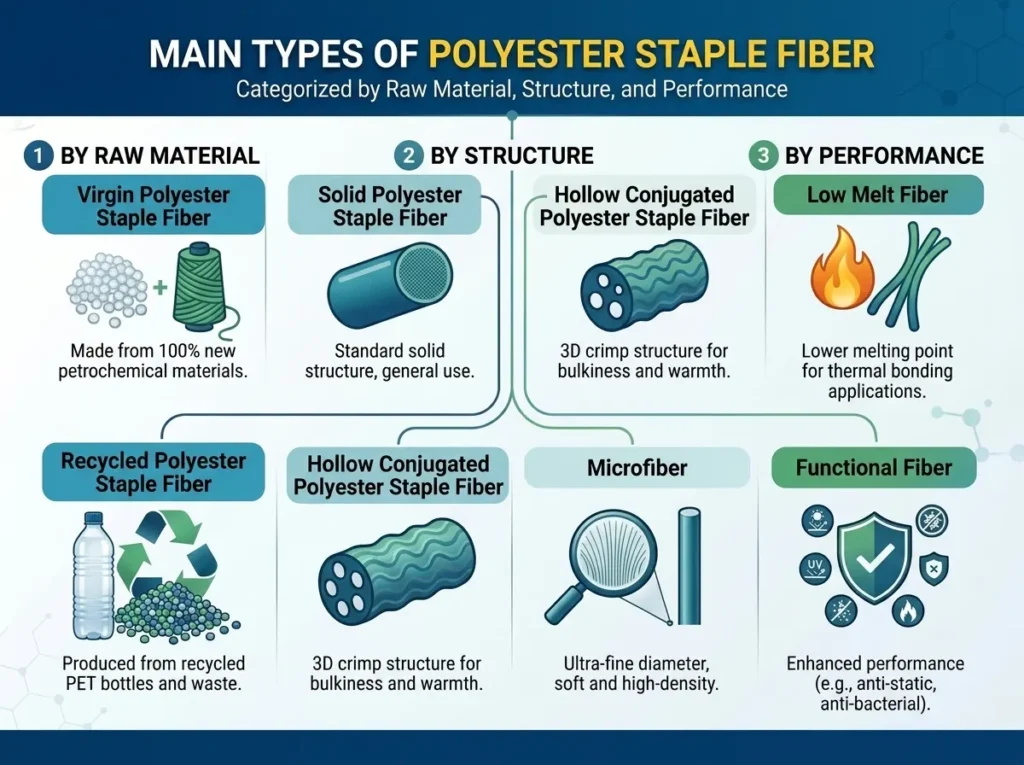
Polyester staple fiber is not a single product category. In the market, it is usually divided into several types depending on structure, raw material source, and performance.
The most common types include:
- Virgin polyester staple fiber.
- Recycled polyester staple fiber.
- Textile fiber.
- Hollow conjugated polyester staple fiber.
- Microfiber.
- Low melt fiber.
- Functional fiber.
Each type has a different purpose, and choosing the right one depends on how the fiber will be processed and what the final product needs to do.
Virgin Polyester Staple Fiber
Virgin PSF is made from fresh polyester raw material. It is often chosen when the buyer wants stable quality, consistent performance, and dependable processing behavior.
This type is commonly used in spinning, filling, and industrial applications where uniformity matters. For manufacturers that need predictable results from batch to batch, virgin fiber remains a standard option.
Recycled Polyester Staple Fiber
Recycled PSF is produced from recycled polyester sources, often including PET bottles or other recovered polyester materials. It is widely used in products that need a lower environmental footprint or that are designed around recycled content.
This type is especially common in home textiles, nonwoven products, stuffing, and other applications where sustainability is part of the sourcing strategy. For many buyers, recycled fiber is also a practical way to balance performance and cost.
Solid Polyester Staple Fiber
Solid PSF has a compact structure and is usually selected when the application needs strength, stability, and reliable handling during production. It is widely used in spinning and general textile applications.
Compared with hollow fiber, solid fiber usually gives less loft, but it often performs better when structure and durability are more important than bulk.
Hollow Conjugated Polyester Staple Fiber
Hollow conjugated fiber contains air inside the fiber structure, which gives it a lighter feel and better thermal retention. It is one of the most common choices for bedding products, pillows, quilts, cushions, and similar filling materials.
If the goal is softness, fluffiness, and warmth, hollow fiber is often one of the first options to consider.
Microfiber
Microfiber is a finer type of polyester staple fiber with a smaller denier. It is often selected when the final product needs a softer touch, better drape, or a down-like feel.
It is commonly used in bedding, garments, plush products, and other filling applications where a soft hand feel is important. Microfiber can also help improve the comfort level of the end product.
Low Melt Fiber
Low melt fiber is designed to soften or bond at a lower temperature than standard polyester fiber. It is commonly used as a binder fiber in nonwoven and thermal bonding applications.
This type is useful when the final product needs structure without relying too heavily on adhesive. Typical applications include padding, filtration, automotive interiors, insulation, and bonded nonwoven products.
Functional Fiber
Functional fiber is a category that includes polyester fibers with specific performance features. Common examples include antibacterial fiber, flame-retardant fiber, and UV-resistant fiber.
These fibers are often used in technical textiles, outdoor products, protective materials, and other applications where standard fiber is not enough. When performance matters, functional fiber can help the final product meet a more specific requirement.
Common Uses of Polyester Staple Fiber
One of the reasons PSF is so widely used is that it fits into many different manufacturing processes. The same fiber category can be used for yarn, filling, bonding, or technical applications depending on the specification.
Common uses include:
- Yarn spinning.
- Home textile filling.
- Nonwoven materials.
- Automotive interiors.
- Filtration.
- Hygiene and medical textile products.
- Specialty performance fabrics.
For spinning, the focus is usually on processing stability and fiber consistency. For filling products, loft, softness, and resilience become more important. For nonwoven and bonded products, melting behavior and bonding performance matter more.
That is why selecting PSF is never just about choosing polyester fiber in general. It is about matching the fiber type to the actual end use.
How to Choose the Right Fiber
Choosing the right PSF starts with the final application. A good specification for one product can be a poor choice for another.
Here are the main points to review before making a decision.
1.End Use
Start with the final product. Are you making yarn, bedding, nonwoven fabric, insulation, or automotive material?
The answer to that question will immediately narrow down the fiber options. A spinning mill and a pillow manufacturer do not need the same type of PSF.
2. Denier
Denier refers to the fineness of the fiber. Lower denier means a finer fiber, while higher denier means a thicker one.
If you need a softer feel or a more delicate surface, microfiber or fine denier options may be a better fit. If you need more volume or a more structured result, a different specification may be more suitable.
3. Cut Length
Cut length affects how the fiber behaves during processing. It is especially important in spinning applications, where machine compatibility and processing stability matter.
The right cut length helps improve production efficiency and can also influence the appearance and hand feel of the final product.
4. Hollow or Solid
Hollow and solid fibers serve different purposes. Hollow fiber is usually better when you want more loft, softness, and thermal retention. Solid fiber is often better when you need strength and structure.
For bedding products, hollow fiber is often a strong choice. For yarn and stable processing, solid fiber may be more suitable.
5. Low Melt or Standard
If your product needs thermal bonding, low melt fiber can be a very practical solution. It helps fibers bond together without depending entirely on adhesives.
If the application is more traditional, standard PSF may be enough. In many cases, the choice comes down to whether the product needs a binder function or not.
6. Functional Requirements
Some products need extra performance, such as antibacterial properties, flame retardancy, or UV resistance. In those cases, a functional fiber is more suitable than standard PSF.
This is often the case in technical textiles, outdoor products, and performance-based applications.
7. Certification and Sustainability
For many buyers, certification and sustainability are part of the selection process. Recycled content, traceability, and testing reports can all influence the final decision.
If you are sourcing for export markets or branded products, it is worth checking whether the supplier can support the required documentation and test results.
Quick Selection Guide
A simple way to narrow down the options is to match the application with the fiber structure.
| Application | Recommended Fiber Type | Why |
|---|---|---|
| Yarn spinning | Solid PSF | Stable processing and structure |
| Bedding and pillows | Hollow PSF or microfiber | Loft, softness, and resilience |
| Nonwoven bonding | Low melt fiber | Thermal bonding performance |
| Sustainable textiles | Recycled PSF | Lower environmental impact |
| Outdoor or technical textiles | Functional fiber | Added performance features |
This table is not a final specification guide, but it is a useful starting point when you are comparing options.
What to Ask Your Supplier
When you contact a polyester staple fiber supplier, it helps to ask a few practical questions before moving forward.
- What is the denier and cut length?
- Is the fiber virgin or recycled?
- Is it hollow, solid, or low melt?
- Can samples be provided for testing?
- Are certifications or test reports available?
- Can the specification be customized for the application?
A good supplier should not only give you a product name. They should also help explain why that product fits your process.
FAQ
What is the difference between virgin and recycled PSF?
Virgin PSF is made from fresh polyester raw material, while recycled PSF is made from recovered polyester sources such as PET bottles or recycled polyester waste. Virgin fiber is often used for consistency, while recycled fiber is often chosen for sustainability goals.
Which PSF is best for filling products?
Hollow fiber and microfiber are often used for pillows, quilts, cushions, and similar products because they offer better loft and softness.
What is low melt PSF used for?
Low melt PSF is used for thermal bonding in nonwoven materials, padding, insulation, automotive interiors, and other bonded structures.
How do I choose the right PSF?
Start with the final product, then review denier, cut length, fiber structure, bonding behavior, and certification requirements. If possible, test samples before placing a bulk order.
Conclusion
Polyester staple fiber is a versatile material, but the right choice depends on the final application, processing method, and performance target. A clear understanding of fiber type, denier, cut length, and structure can help buyers reduce trial-and-error and make better sourcing decisions.
At MAKEIT, we supply a wide range of polyester staple fiber solutions for different applications, including recycled fiber, hollow conjugated fiber, microfiber, low melt fiber, and functional fiber. With manufacturing experience and certifications such as GRS, OEKO-TEX, Inditex, ISO 9001, ISO 14001, and ISO 45001, we support B2B buyers with stable supply, custom specifications, and practical product guidance.
If you are evaluating PSF for your next project, contact our team for a datasheet, sample, or quotation.