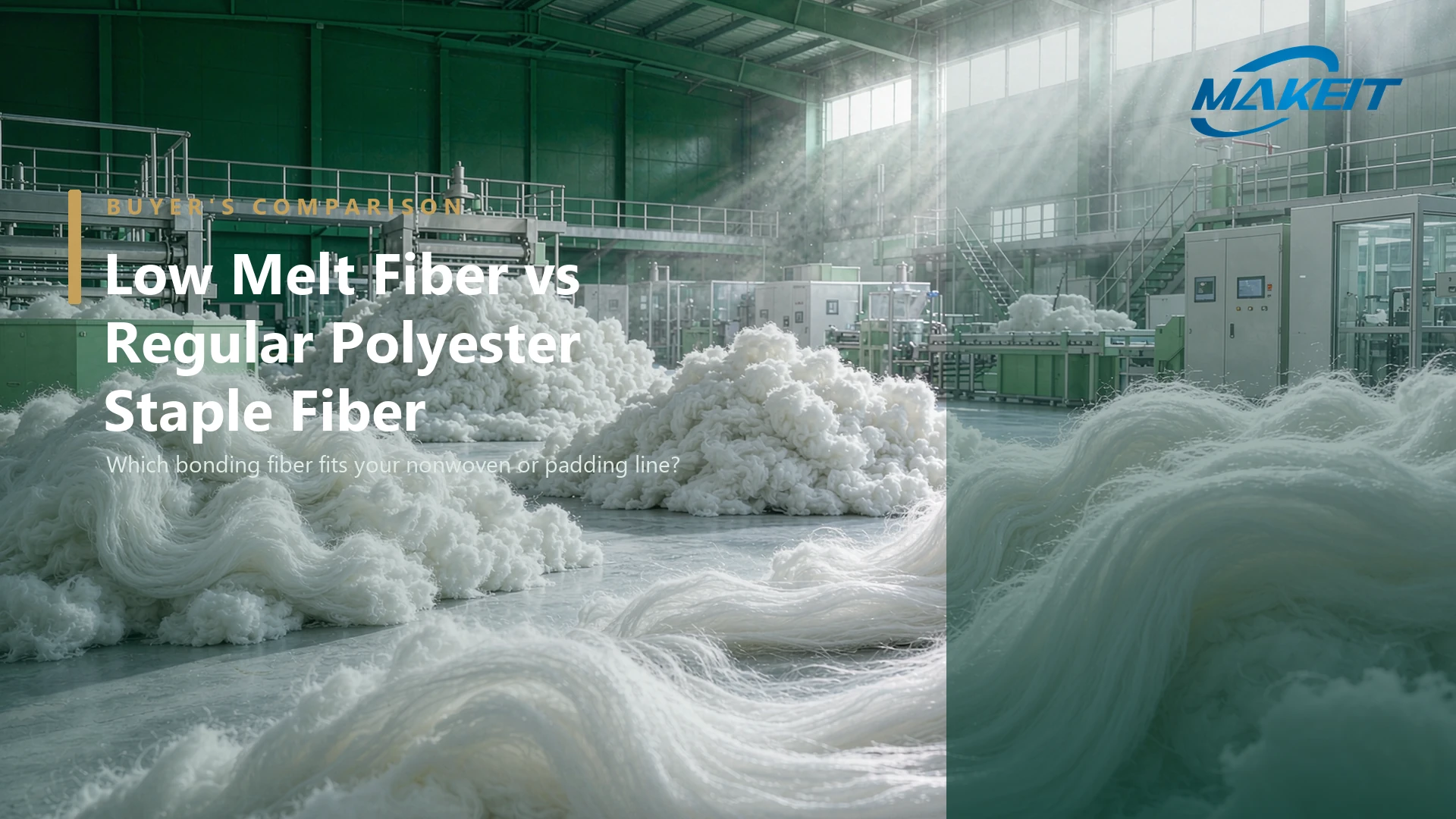
If you are making padding, wadding, automotive insulation or needle-punched nonwovens and trying to decide between low melt fiber and regular polyester staple fiber (PSF), the short answer is: they are not substitutes — low melt is a bonding component, regular PSF is the body fiber. Most buyers who compare them as rivals are actually asking the wrong question.
This guide compares the two by structure, bonding behaviour, processing, cost and end use — the things that actually decide whether a line runs cleanly and a product holds together.
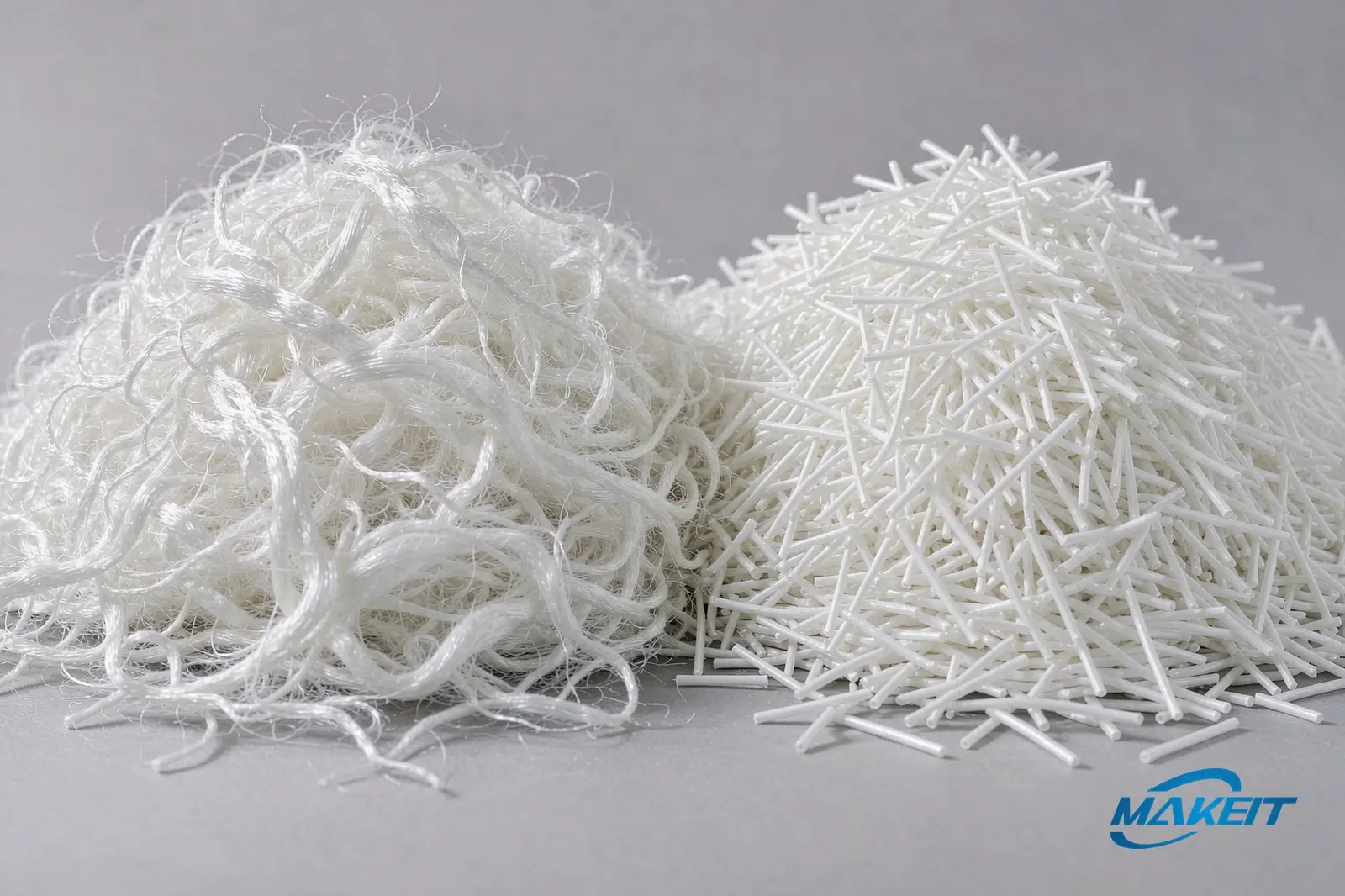
Low Melt Fiber vs Regular PSF at a Glance
Want the quick version? Here is a side-by-side comparison you can scan before diving into the technical detail.
| Criterion | Low melt polyester fiber | Regular polyester staple fiber |
|---|---|---|
| Primary role | Bonding / binder fiber | Body / bulk fiber |
| Bonding mechanism | Melts and fuses under heat | Does not self-bond at normal processing temperatures |
| Structure | Typically sheath-core or bicomponent, or a lower-melt polymer | Homogeneous PET staple fiber |
| Melting behaviour | Softens and melts at a lower temperature to weld surrounding fibers | Retains shape; higher melting point |
| Typical use level | A blend component (commonly a minority share) | The majority of the blend |
| On its own | Rarely used alone | Often the base fiber in blends |
| Cost per kg | Usually higher than commodity PSF | Usually lower |
| What it decides | Whether the web holds together | Loft, hand feel, bulk, coverage |
What Is Low Melt Fiber?
Low melt polyester fiber is a bonding fiber designed to soften and fuse when heated. In thermal bonding, it acts as the “glue” that welds the surrounding body fibers together — without adding liquid adhesive.
At MAKEIT, low melt fiber is supplied for thermal bonding in padding and nonwoven structures. Standard specifications include 2D×51 mm, 4D×51 mm and 4D×64 mm, and specifications can be adjusted to customer requirements. The grade and blend ratio should be selected according to the base fibers, processing conditions and the finished-product properties you need.
The important point: low melt fiber is defined by what it does under heat, not by a single denier or cut length.
What Is Regular Polyester Staple Fiber?
Regular polyester staple fiber is the general-purpose body fiber used across spinning, filling and nonwoven applications. It does not melt and bind at the temperatures used in normal carding and thermal bonding; instead it provides the bulk, loft, hand feel and coverage of the final product.
MAKEIT supplies PSF for spinning, filling and nonwoven uses, including recycled, hollow conjugated, dope-dyed, microfiber and functional grades. In a thermally bonded product, regular PSF is almost always the majority component.
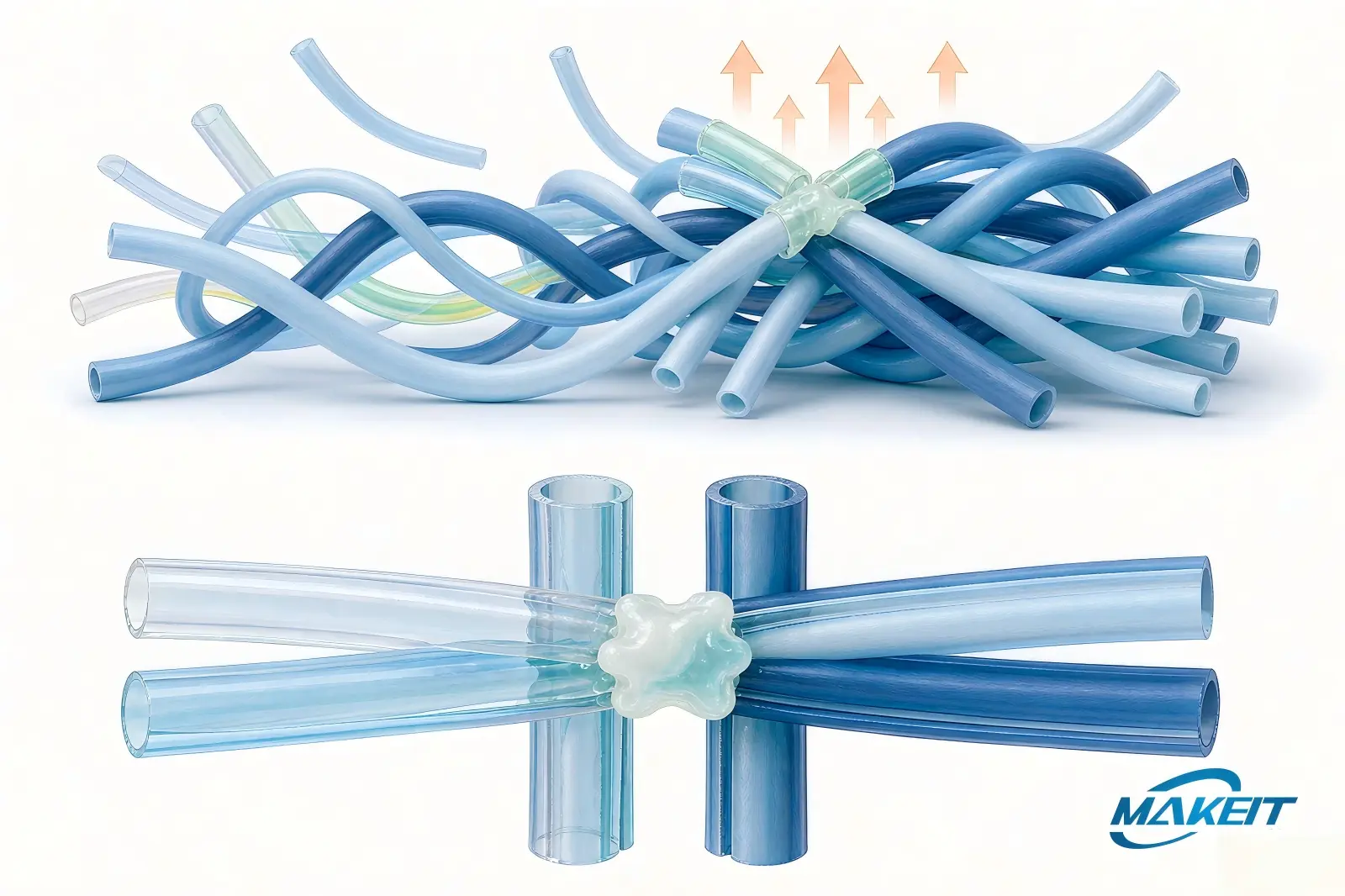
How Bonding Actually Works
The reason buyers compare these two fibers is that bonding is where they meet:
- Regular PSF forms the web. It is carded and laid down as the main structure.
- Low melt fiber is blended in. During heating, the low melt component softens and flows at fibre crossover points.
- Cooling locks the structure. The molten material solidifies, welding fibres together and giving the web coherence.
Neither fiber alone gives you a typical bonded pad. Regular PSF alone has no mechanism to hold the web together under heat. Low melt fiber alone is costly and does not deliver the bulk and hand feel you want. The value is in the blend ratio.
Why Online Comparisons Get This Wrong
A common claim online is that low melt fiber is simply “better” or “stronger” than normal polyester fiber. That is misleading.
Low melt is not a stronger version of PSF — it is a specialised binder. Its job is bonding, not loft or coverage. Judging it by the same criteria as body fiber (softness, bulk, price per kilo) misses the point. Conversely, expecting regular PSF to bond thermally because it is “polyester” leads to web failure on the line.
The correct comparison is not “which fiber wins” but “what share of each fiber does my product need”.
Which Fiber Fits Each Application?
| Application | Role of low melt fiber | Role of regular PSF |
|---|---|---|
| Padding / wadding | Binds the web so the pad holds shape | Provides loft, softness and fill |
| Nonwoven interlining | Provides thermal bond strength | Provides body and hand feel |
| Automotive insulation | Welds fibres for structural stability | Provides bulk and thermal loft |
| Mattress / cushion layers | Locks layers together | Provides comfort and resilience |
| Filter media | Contributes bonding where heat is applied | Provides the fibre matrix |
A practical rule: the more a product needs to hold together under handling, washing or compression, the more the low melt share matters. The more it needs softness, loft and coverage at lowest cost, the more regular PSF dominates.
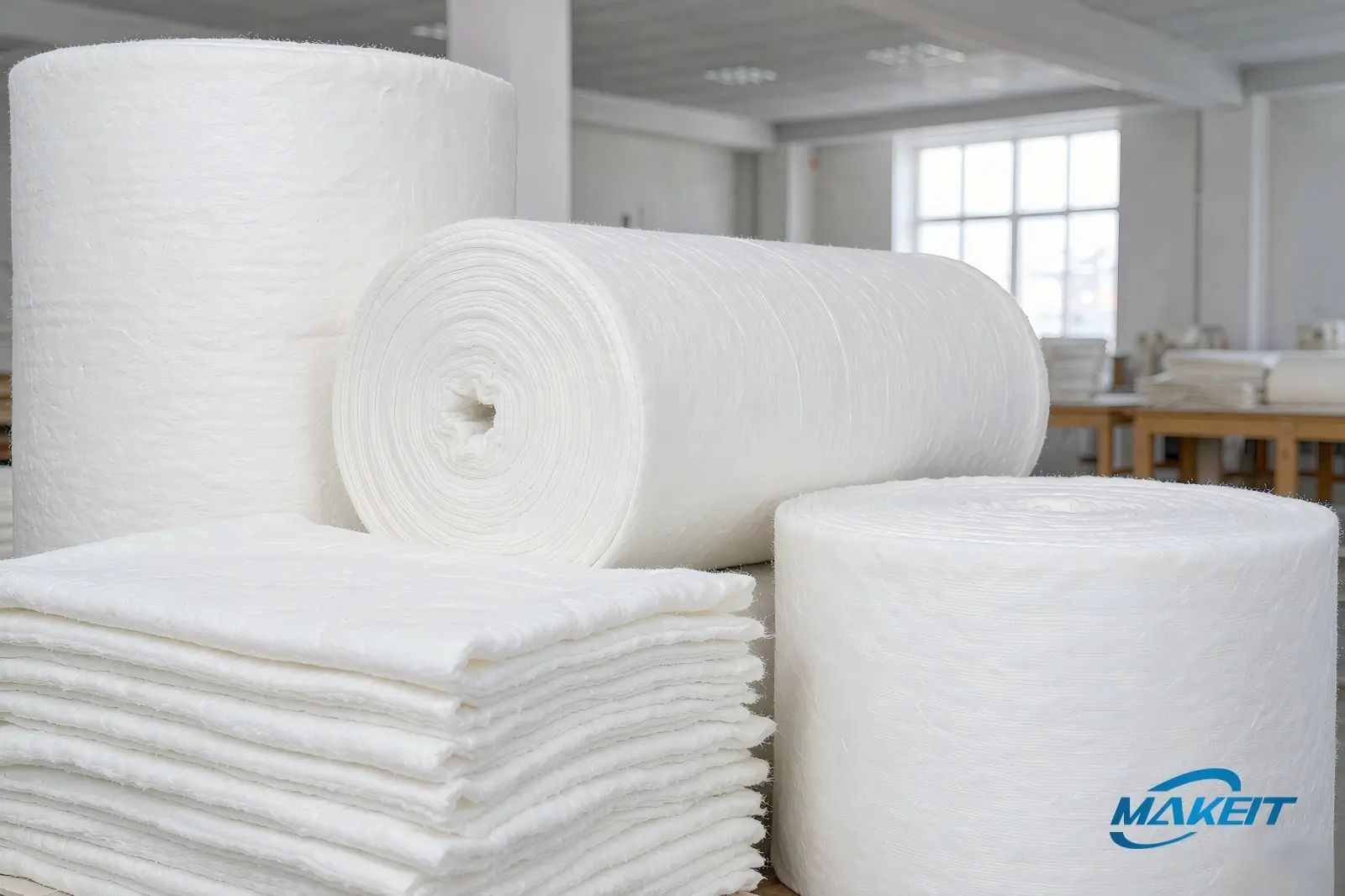
Specifications That Matter More Than the Product Name
Buyers often fixate on the label “low melt” and ignore the numbers. What actually affects performance:
- Denier and cut length — MAKEIT standard low melt sizes are 2D×51 mm, 4D×51 mm and 4D×64 mm; custom sizes are possible.
- Blend ratio — too little low melt gives weak bonding; too much raises cost and can stiffen the hand feel.
- Base fiber compatibility — the low melt grade must suit your base fibers and their denier.
- Processing temperature and line speed — bonding depends on heat history, not just fiber type.
- Target finished properties — bond strength, loft, drape and wash performance pull the ratio in different directions.
For regular PSF, the equivalent variables are denier, cut length, crimp, finish, cross section and — where recycled content matters — feedstock and certification.
Processing Differences on the Line
In practice, the two fibers behave differently:
- Carding: Both can be carded, but low melt fiber must not be over-heated before the bonding stage, or it can tack up the card.
- Bonding: Low melt activates in the oven or calender; regular PSF simply passes through.
- Temperature control: Low melt requires tighter thermal control. Too cool, and bonding fails; too hot, and the web can become boardy or shrink.
- Blending uniformity: Because low melt is the minority component, uneven blending produces weak spots.
If your line currently runs 100% regular PSF, adding low melt is a process change, not just a material swap. Run a controlled trial.
Cost: Price Per Kilo vs Cost Per Finished Product
Low melt fiber usually costs more per kilogram than commodity PSF — that is expected. The right comparison is cost per finished, conforming product:
- A slightly more expensive low melt grade that bonds cleanly at lower add-on can cost less per good metre than a cheap grade that needs a higher share.
- Web failures, boardy hand feel and rework caused by poor bonding cost far more than the fiber price difference.
- Regular PSF keeps the bulk cost down; low melt buys you structural integrity.
Ask suppliers for the recommended add-on rate and the processing window, not just the price list.

How to Run a Fair Low Melt vs Regular PSF Trial
If you are evaluating grades or ratios:
- Keep the base PSF, web weight and line settings constant.
- Change only the low melt share or grade.
- Produce sample pads at the same temperature and speed.
- Test bond strength, loft recovery, hand feel and — if relevant — wash durability.
- Keep a golden sample and record the exact ratio and settings.
Changing several variables at once makes it impossible to know what worked.
Can You Use Low Melt Fiber Without Regular PSF?
Technically yes, but it is rarely sensible. A web of only low melt fiber has no body-fiber economics and can become stiff, dense or uneven. Low melt is a functional additive; regular PSF is the workhorse. The best results almost always come from a controlled blend.
Buyer Decision Checklist
Before placing a bulk order:
- Define the finished product, bonding method and required bond strength.
- Confirm low melt denier and cut length (e.g. 2D×51 mm, 4D×51 mm, 4D×64 mm) and whether custom specs are needed.
- Confirm the recommended blend ratio for your base fiber.
- Check the thermal window against your oven or calender capability.
- Approve a controlled trial and keep a golden sample.
- Compare cost per finished unit, not just price per kilo.
Frequently Asked Questions
What is the difference between low melt fiber and regular polyester staple fiber?
Low melt fiber is a bonding fiber that softens and fuses under heat to weld other fibers together. Regular polyester staple fiber is the body fiber that provides bulk, loft and hand feel and does not self-bond at normal processing temperatures.
Can regular polyester staple fiber be used for thermal bonding?
Not by itself at normal bonding temperatures. Regular PET retains its shape; a lower-melt bonding component is normally added to create the bond.
What specifications does MAKEIT’s low melt fiber come in?
Standard sizes are 2D×51 mm, 4D×51 mm and 4D×64 mm. Specifications can be adjusted to customer requirements.
How much low melt fiber should I blend in?
It depends on the base fiber, bonding method and target properties. Too little weakens the bond; too much raises cost and can stiffen the product. Run a controlled trial and keep a golden sample before scaling.
Is low melt fiber more expensive than regular PSF?
Usually yes per kilogram, but the right metric is cost per finished, conforming product. A well-chosen grade at the right add-on can be cheaper overall than a low-cost grade that causes web failures.
The Bottom Line
Low melt fiber and regular polyester staple fiber are not competitors — they are partners in a thermally bonded product. Regular PSF supplies the body; low melt supplies the bond. The decision is not “which one” but “how much of each”, and that answer comes from a controlled trial on your own line.
If you are developing padding, wadding or nonwoven structures and want to discuss grade selection and blend ratios, contact MAKEIT with your base fiber, target product and processing conditions.